Nyhed
AAU and DMI join forces to predict droughts
Lagt online: 04.11.2025
Nyhed
AAU and DMI join forces to predict droughts
Lagt online: 04.11.2025
AAU and DMI join forces to predict droughts
Nyhed
Lagt online: 04.11.2025
Nyhed
Lagt online: 04.11.2025
By Susanne Togeby, AAU Communication and Public Affairs
Photos: AAU and DMI
Do you remember the summer of 2018? It was an exceptionally warm and sunny summer, and at the time, DMI assessed that it was likely the driest summer of the century in Denmark. However, according to Associate Professor Maike Schumacher from Aalborg University, such weather events have become somewhat less unusual. Climate change has made drought periods both longer and more intense. In Europe, there was drought across several consecutive summers from 2018 to 2021, and in Denmark, the record-dry summer was followed by yet another severe drought in 2023.
That is why, according to Maike Schumacher, it is more important than ever to be able to monitor and predict drought periods. She cites as an example that the 2018 drought led to major losses for the Danish agricultural sector—up to 8 billion DKK when indirect effects on other sectors are also included.
“If agricultural production declines, it can lead to job losses, general economic losses, food insecurity, and rising food prices. We need to monitor and predict drought periods to understand the potential consequences of drought and how these periods are connected to climate change,” says Maike Schumacher.
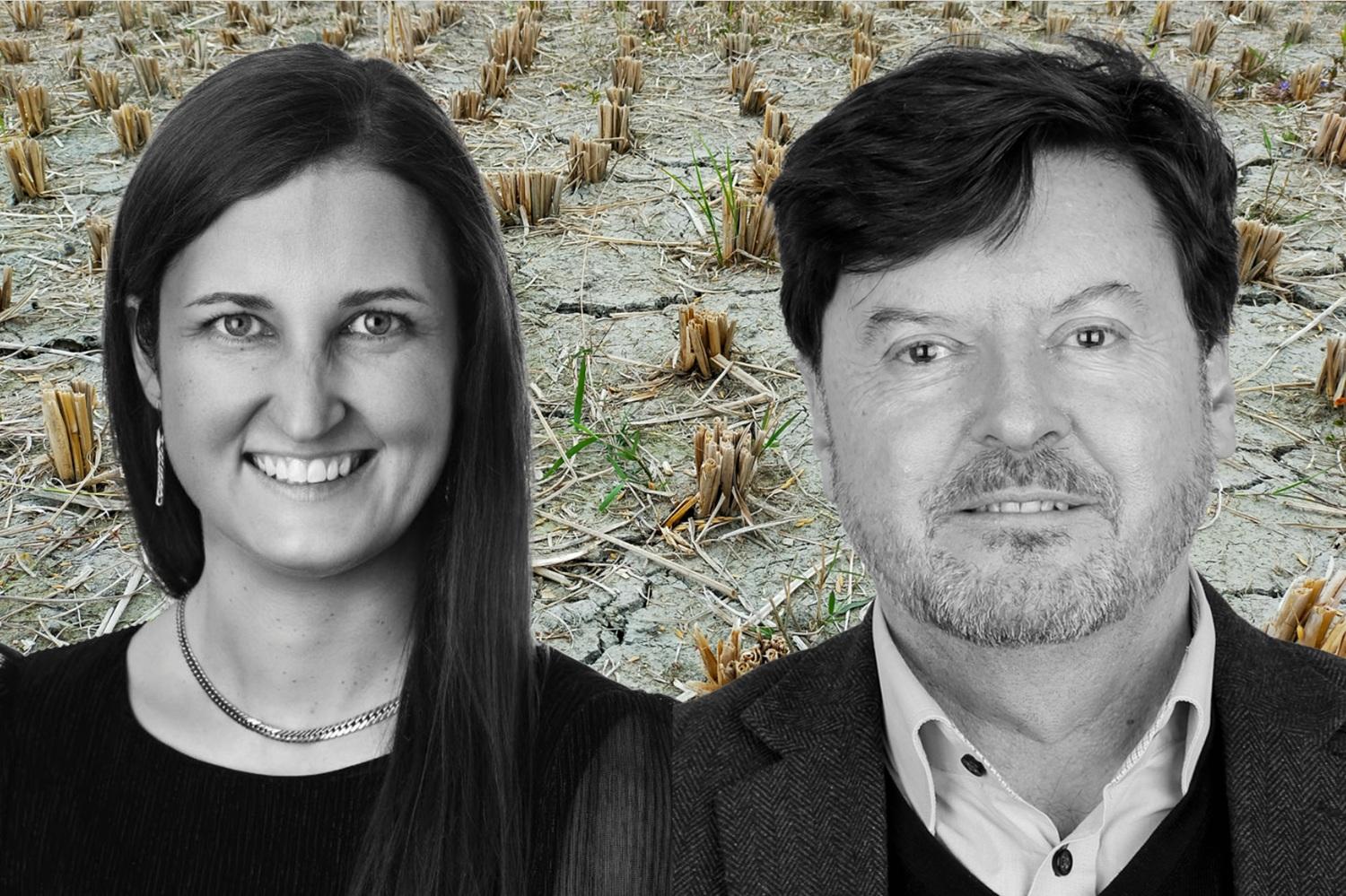
With funding from the Independent Research Fund Denmark, DMI and Aalborg University will collaborate to improve the accuracy of drought forecasts. DMI and various European initiatives already have tools that monitor signs of drought in both Denmark and across the European continent. However, according to Maike Schumacher, basic research is still needed to make forecasting and monitoring systems more precise. Maike Schumacher will lead the research project together with Michael Butts from DMI.
The researchers will use various methods and data sources, including simulations of water movement and satellite observations, to predict droughts more accurately and reduce uncertainty in forecasts. Through the project, they will gain important insights into the processes that govern the dynamics of drought—how drought begins, develops, and ends—and how climate change affects the entire cycle.
The first results for model-based drought indicators for Denmark are expected to be available in the summer of 2027. The results from the project will later become part of DMI’s current drought monitoring system, says Maike Schumacher, and continues:
“Drought indicators give decision-makers a better opportunity to detect drought conditions early. They can show what consequences the drought might have for, for example, agriculture, and help in planning proactive strategies. We can use them both to track long-term trends and for early forecasting.”
Title: Drought Resilience through satellite-integrated Early warning And Monitoring (DREAM)
Participants: Maike Schumacher, Department of Sustainability and Planning, Aalborg University, and Michael Butts(DMI)
Grant: 7,199,795 DKK
Funder: Independent Research Fund Denmark (DFF) under the theme Green Research
Purpose: To develop more precise methods for predicting and monitoring droughts
Click + to read more about the project.