Nyhed
AAU's Energy Mission contributes to stronger cooperation between Denmark and Massachusetts
Lagt online: 16.02.2026
Nyhed
AAU's Energy Mission contributes to stronger cooperation between Denmark and Massachusetts
Lagt online: 16.02.2026
AAU's Energy Mission contributes to stronger cooperation between Denmark and Massachusetts
Nyhed
Lagt online: 16.02.2026
Nyhed
Lagt online: 16.02.2026
By Mette Hjorth Rasmussen, AAU Communication and Public Affairs
Photo: Private & Inovation Centre Denmark, Consulate of Denmark, Boston
Denmark-Massachusetts agreement involving AAU's Mission for Sustainable Energy
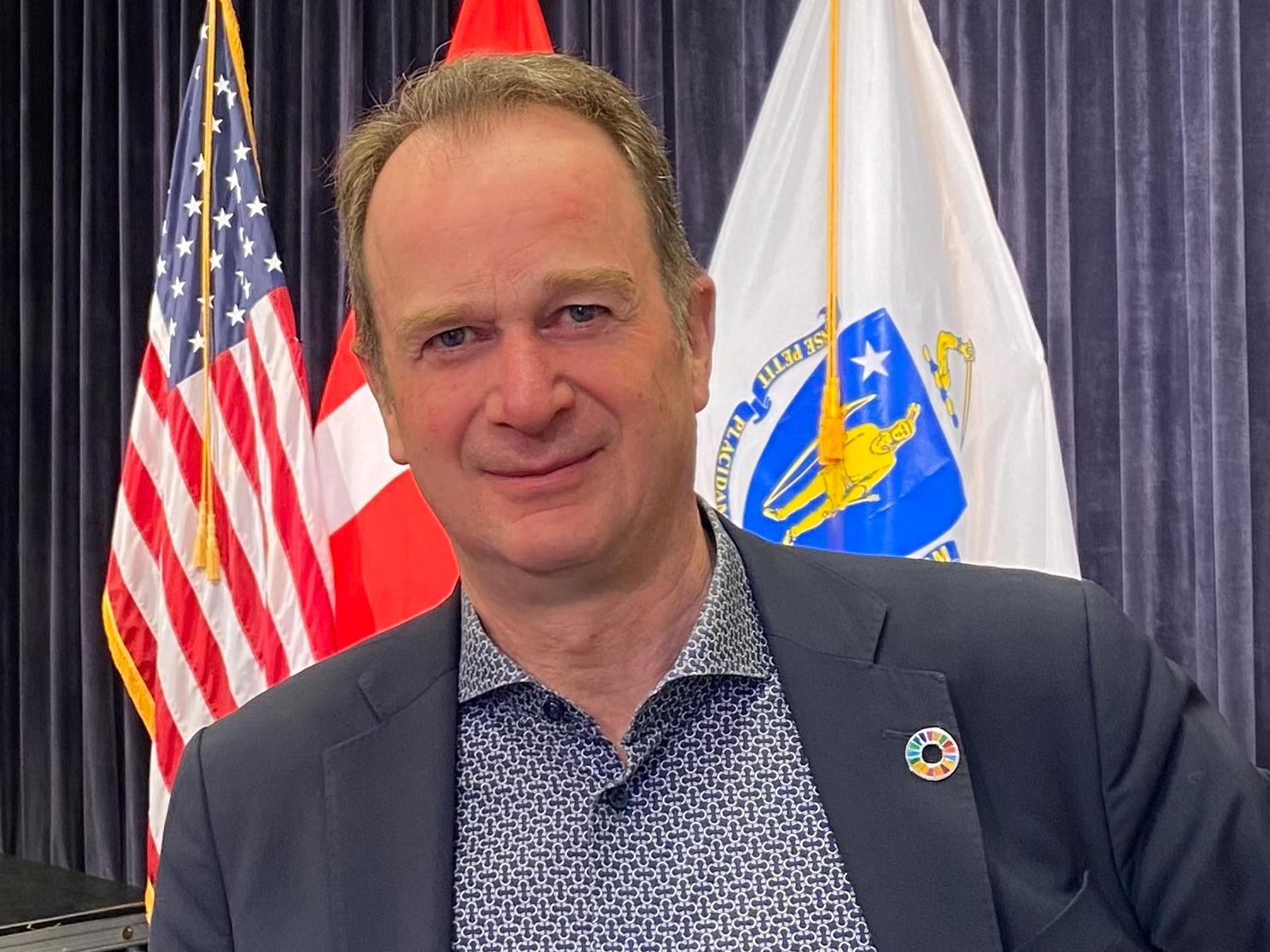
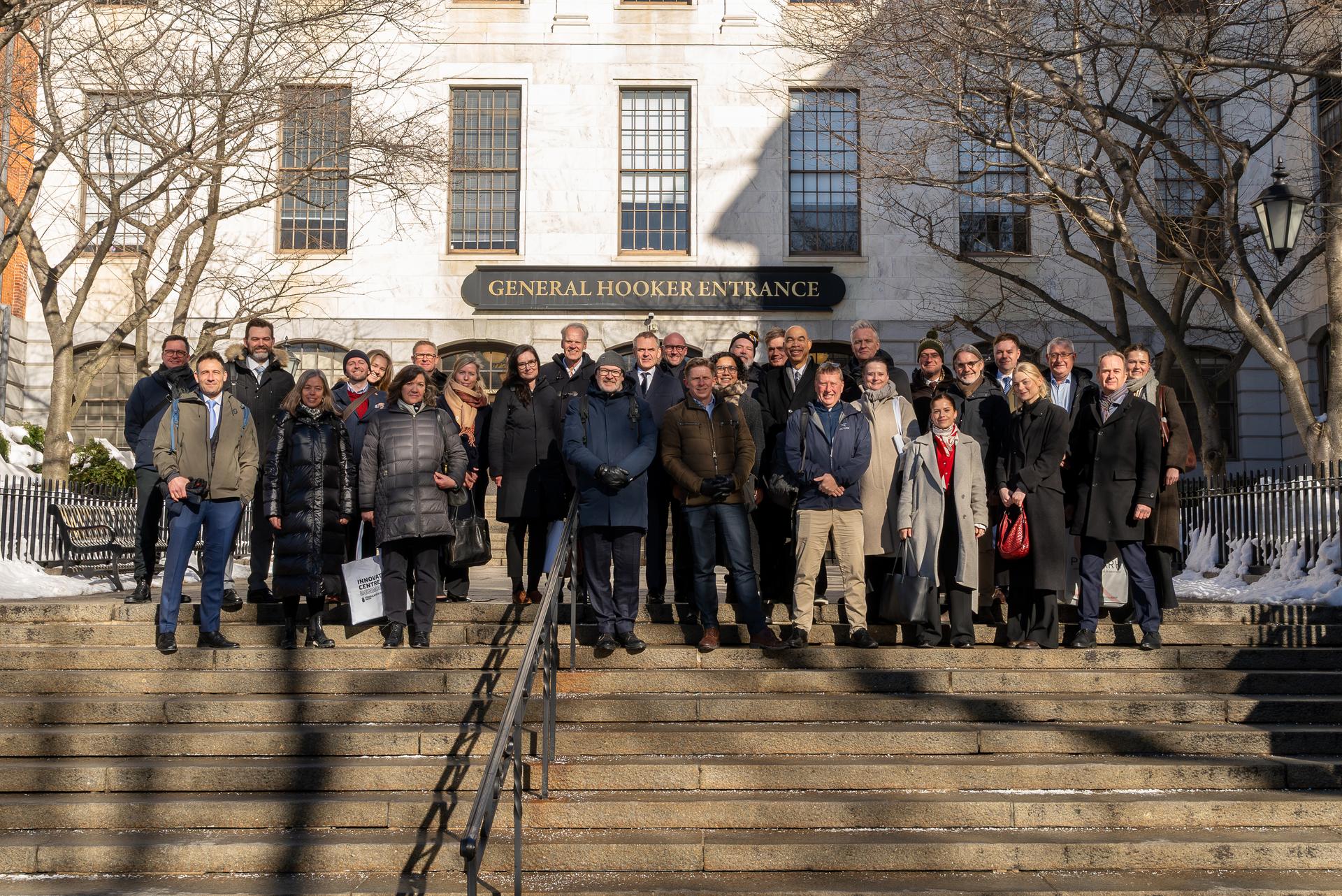
Professor Jakob Stoustrup from Aalborg University participated in a Danish delegation to Massachusetts to strengthen cooperation on energy, innovation and sustainable technologies. He represented both AAU's Mission for Sustainable Energy and Energy Cluster Denmark and sees great potential for collaboration in the areas of smart energy systems, digital energy, sustainable resources and Power-to-X.
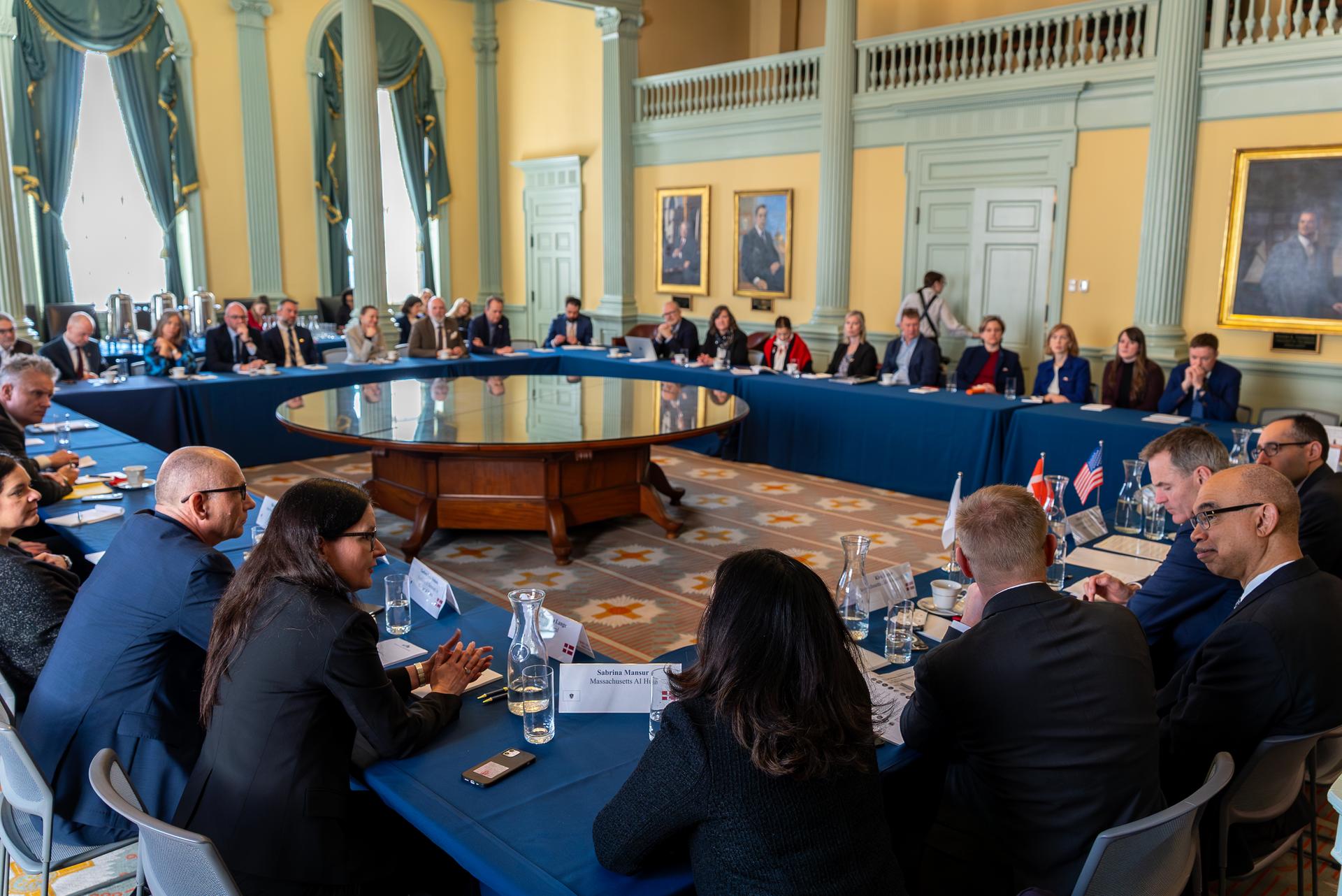
Denmark and Massachusetts are now intensifying cooperation between research institutions, companies and public actors on both sides of the Atlantic. Professor Jakob Stoustrup from the Department of Electronic Systems participated on behalf of AAU's Mission for Sustainable Energy, which shares many goals with Massachusetts.
"Massachusetts has set the bar high for the green transition – just as we know it from the Danish Climate Act of 2020. We have parallel ambitions to develop energy systems with significantly lower climate impact, and therefore it makes perfect sense that we intensify our collaboration," says Jakob Stoustrup.
The new agreement between Denmark (DK) and Massachusetts (MA) did not emerge overnight but grew out of a collaboration that goes back a decade. Aalborg University has been an active part of the Cross Atlantic Network for System Integration (CANSI) – a network that for a number of years has brought together researchers and actors in energy systems across the Atlantic.
"The CANSI network has played a direct role in the development of the new government agreement. Strong professional relationships have been built up between MA and DK, and that history is clearly reflected in the interest and goodwill we met," says Stoustrup.
The current US federal government's work on deregulation has created new opportunities for new direct agreements between smaller countries and US states. For Denmark, this means that collaborations with states of a certain size – such as Massachusetts – can be established more flexibly.
"There was a surprisingly large interest from the American side in cooperating much more extensively. Denmark is recognized for unique competencies in the energy field, both in terms of technology, regulation and practical solutions. This makes Danish universities and companies very attractive partners," says Jakob Stoustrup.
He also points out that Denmark has one of the longest uninterrupted diplomatic relationships with the United States, which stretches back more than 225 years. "It is important to maintain and expand relationships - even when the political winds change. This agreement contributes significantly to strengthening the constructive relationship."
Jakob Stoustrup expects close collaboration across the entire Mission for Sustainable Energy. He highlights five areas where the potential is particularly great:
In addition to his role for AAU's energy mission, Jakob Stoustrup also represented Energy Cluster Denmark, where he is a board member. Here, he presented opportunities to the American partners for transatlantic innovation projects.
"Energy Cluster Denmark can open doors to a wide range of companies – large and small – and thus create faster access to specific collaborative projects. It was received very positively," he says.
Another AAU professor was also part of the Danish delegation, namely Brian Vad Mathiesen from the Department of Sustainability and Planning. Read more here: Denmark and Massachusetts strengthen their collaboration with participation from AAU.
Translated by Susanne Togeby
Click to view the list of participants in the delegation.