Nyhed
Green and blue urban spaces could save us from heatwaves
Lagt online: 19.08.2025
Nyhed
Green and blue urban spaces could save us from heatwaves
Lagt online: 19.08.2025
Green and blue urban spaces could save us from heatwaves
Nyhed
Lagt online: 19.08.2025
Nyhed
Lagt online: 19.08.2025
By Kim Rathcke Jensen, AAU Communication and Public Affairs
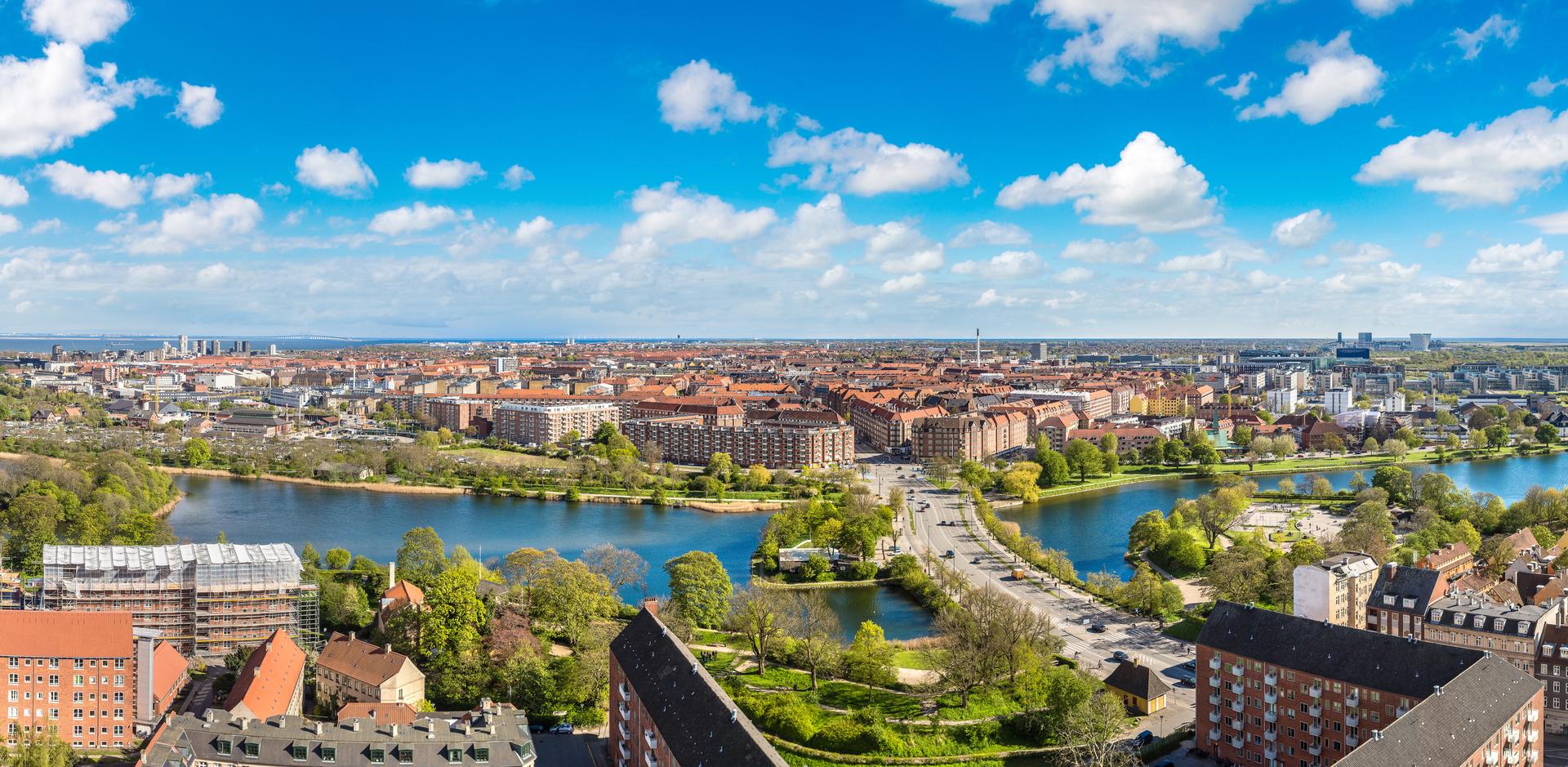
Photo: Colourbox
The climate is changing. It’s getting warmer, even in urban environments. Heatwaves are unpleasant, but they can also pose serious health risks to residents. That’s why we need to improve our ability to reduce urban temperatures.
Researchers have long known that green and blue spaces in cities can help lower temperatures. But now, two students from Aalborg University have determined the temperature impact in Copenhagen. Proximity to the sea can reduce temperatures by up to two degrees within 150 metres. Green areas typically lower temperatures by half a degree. And the cooling effect doubles, up to one degree, when green spaces are combined with blue ones.
Rikke Selvig Andersen and Josefine Brejnbjerg Buch, who completed their master’s degree in land surveying science at Aalborg University this summer, investigated this by analysing data from Copenhagen. “We found that blue areas, such as lakes, rivers or the sea, can help cool the city. The effect depends on the type of water. The sea, in particular, has a significant cooling impact. And when blue areas are combined with green spaces vegetated with plants and trees, the cooling effect becomes even stronger,” says Rikke Selvig Andersen.
The analysis was based on extensive datasets from satellites, geographic information systems, and various statistics.
The analysis shows that the interaction between water and vegetation is crucial for keeping cities cooler. In contrast, asphalt and concrete, which typically dominate the urban landscape, prevent the ground from absorbing and distributing heat. That’s why Copenhagen becomes warmer, the two students explain.
This is an important insight that can help us design cities better equipped to handle rising temperatures and reduce the negative impacts of heat on public health, energy consumption and the environment.
“We’ve demonstrated the importance of preserving green and blue areas in cities - especially in combination,” emphasises Josefine Brejnbjerg Buch. “We hope this knowledge can inspire future urban planning by highlighting which areas have the greatest impact on temperature,” adds Rikke Selvig Andersen.
Translated by: Laura Johanne Carlsen